
Why Great Wedding Photography Needs More Than One Style
A wedding day moves quickly.
It shifts from quiet to emotional, from elegant to joyful, from beautifully organized to completely unpredictable — sometimes all within the same fifteen minutes.
That is part of what makes it so meaningful.
It is also why truly great wedding photography cannot rely on just one style.
A wedding photographer needs more than one gear. More than one instinct. More than one way of seeing.
Because a wedding day asks for all of it.
It asks for calm direction during portraits.
It asks for quick thinking during family formals.
It asks for candid awareness during the in-between moments.
It asks for documentary sensitivity during the ceremony and speeches.
And it asks for the experience to know when to step in and when to quietly disappear.
That balance matters more than many couples realize.
Because once you understand that, you stop looking only at beautiful images and start understanding what kind of photographer can actually carry a wedding day well.
Weddings Do Not Stay in One Mode for Long
This is one of the biggest differences between weddings and many other types of photography.
A wedding day is not one long portrait session. It is not one single mood. It is not one fixed type of moment repeated over and over again.
It changes constantly.
The getting-ready portion may feel soft and personal.
The ceremony may feel emotional and sacred.
The family photos may need structure and efficiency.
The couple portraits may need guidance and breathing room.
The reception may shift into fast movement, low light, and spontaneous energy.
A photographer who only works comfortably in one style can start to feel out of step very quickly.
That is why weddings need more than one style.
They need someone who can move with the day.
Great Wedding Photography Needs Gentle Direction
Let’s start with the obvious one.
Most couples are not professional models. Most wedding parties are not fully comfortable in front of a camera. Even confident people can feel a little unsure when all eyes are on them and the day is moving quickly.
That is where gentle direction matters.
A good wedding photographer knows how to place people in flattering light, guide hands naturally, suggest movement that feels easy, and create portraits that look relaxed instead of stiff.
That is not over-posing.
That is helping people feel comfortable enough to look like themselves at their best.
Some people need only the lightest nudge.
Some need a little more reassurance.
Some need a photographer who can make the moment feel easy before the expression ever becomes natural.
That is part of the craft.
Great Wedding Photography Also Needs Candid Instinct
Not every meaningful wedding image can be created through direction.
Some of the most unforgettable moments happen in between.
A father seeing his daughter in her dress.
A quiet hand squeeze before the ceremony.
A laugh that catches everyone off guard.
A flower girl doing something completely unexpected.
A glance across the room that lasts half a second.
Those moments cannot be staged the same way. They have to be noticed.
That is where candid instinct comes in.
A strong wedding photographer is always paying attention — not just to where people are standing, but to what is changing emotionally, who is reacting, and where a real moment is about to unfold.
That awareness is one of the things that gives a wedding gallery life.
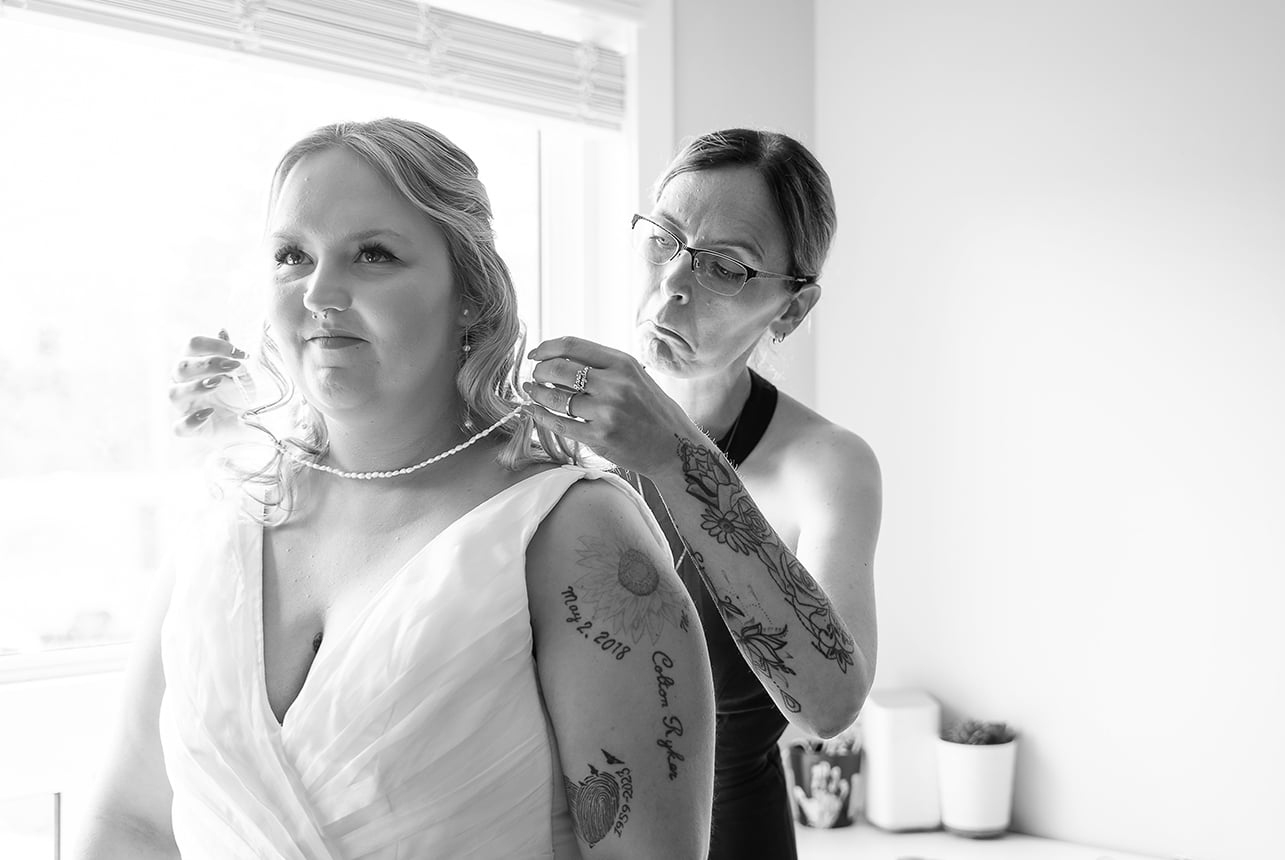
Documentary Awareness Is What Gives a Wedding Gallery Depth
This is where the story comes in.
Documentary-inspired wedding photography is not about being passive. It is not about wandering around and hoping something happens. It is about observing with intention.
It is about understanding the flow of the day well enough to notice what matters without interrupting it unnecessarily.
The best documentary moments at a wedding often happen when no one is performing for the camera at all.
A mother straightening a veil.
A groom taking a breath before the doors open.
Guests wiping away tears during the vows.
The rhythm of the room during speeches.
The little pieces of the day that would be easy to miss if a photographer were only focused on portraits.
That is why documentary awareness matters so much.
It helps preserve not just how the wedding looked, but how it felt.
You can see how these styles overlap in our article on candid vs lifestyle vs documentary photography.
Wedding Days Need a Photographer Who Can Read People Quickly
This is one of the least talked-about parts of wedding photography, and one of the most important.
A great wedding photographer is not just reading light and timing. They are reading people.
They are noticing who feels confident.
Who feels nervous.
Who needs direction.
Who needs space.
Who is awkward in a pose that works beautifully for someone else.
Who will loosen up the moment they start walking or laughing instead of standing still.
That matters.
Because weddings are full of different personalities, different comfort levels, and different energies — all moving together in real time.
Knowing how to respond to that is a huge part of what makes the day feel smooth.
Some couples need softness and calm.
Some need quick clear direction.
Some need to stop overthinking and simply move together.
Some need the photographer to create a little space so the moment can happen naturally.
That kind of people-reading is not just a technique.
It is experience.
It is instinct.
It is part of the talent behind the work.
Family Formals Are Their Own Kind of Skill
This is where a lot of wedding days quietly rise or fall.
Family photos may look simple when everything is running well, but they require a very specific kind of confidence. You need organization, speed, diplomacy, patience, and the ability to keep everyone feeling cared for while still keeping the day moving.
That is a real skill.
A photographer needs to know how to group people efficiently, how to make subtle posing adjustments that flatter different body types, how to help awkward people relax, and how to keep the energy from dipping while still making room for genuine expression.
That is one reason photographing families throughout the year can be such a strength.
Working with parents, children, grandparents, siblings, and all kinds of personalities teaches you a great deal about flow, comfort, and connection. And those same instincts carry beautifully into weddings — especially during family formals and larger groupings.
The Best Wedding Photographers Know When to Step In and When to Step Back
This may be the heart of the whole article.
There are moments on a wedding day that absolutely need leadership.
Portraits.
Group photos.
Timelines that are slipping.
Crowds that need gentle organizing.
And then there are moments that need space.
The vows.
A quiet pause between the couple.
A tearful parent reaction.
A candid exchange that would disappear the second it felt watched.
A strong photographer knows the difference.
That is one of the biggest reasons great wedding photography needs more than one style. Because the day itself asks for more than one response.
Sometimes the job is to guide.
Sometimes the job is to simplify.
Sometimes the job is to anticipate.
Sometimes the job is simply to witness well.
Why Experience Changes Everything
In the beginning, many photographers naturally lean more heavily into one style.
Some are most confident when they are directing.
Some are drawn to candids but still learning how to guide portraits well.
Some love the documentary side but have not yet learned how to handle the faster, more demanding parts of a wedding day with ease.
That is part of growing.
But over time, the strongest photographers develop range.
They begin to move more fluidly between structure and spontaneity. They learn how to shift gears quickly, how to work under pressure without losing softness, and how to bring out real moments even when the timeline is tight.
That range is what makes a wedding gallery feel complete.
Not one-note.
Not repetitive.
Not all posed.
Not all random.
Complete.
Editing Style Matters Too
Style does not end when the shutter clicks.
Editing has a huge impact on how a wedding gallery feels as a whole.
A beautiful candid image can lose its honesty if it is over-processed. A romantic portrait can stop feeling timeless if the edit chases a trend too hard. A wedding gallery can feel disjointed if every part of the day is pushed in a different direction.
That is why true-to-life editing matters so much.
It helps the gallery feel cohesive.
It keeps skin tones natural.
It lets colours stay beautiful without becoming distracting.
And it allows the people and the emotion to remain the heart of the image.
That is also why practical questions about high-resolution images, print rights, and watermarks are worth understanding before you book. The experience does not end with the session itself. It continues through delivery, printing, sharing, and how your memories are preserved over time.
How We Approach Wedding Photography at Catriona Hope Photography
At Catriona Hope Photography, we do not believe a wedding day should be forced into one narrow style.
Some moments deserve structure.
Some need movement.
Some need patience.
Some need quiet observation.
Some need a calm voice and quick guidance.
Others simply need room to happen.
That is part of what we love most about wedding photography.
It asks us to bring everything together — the ability to guide naturally, the instinct to notice real emotion, the experience to work with groups smoothly, and the sensitivity to preserve the atmosphere of the day as it unfolds.
For us, the goal is never to prove a label.
It is to create wedding photography in Edmonton & Sherwood Park that feels elegant, honest, warm, and true to life — with enough versatility to hold all the different layers a wedding day naturally brings.
So What Should Couples Look For?
Look beyond the style word.
Look at whether the photographer can handle multiple kinds of moments well.
Can they create strong portraits without making people feel stiff?
Can they capture candids that feel genuine?
Can they work with family groupings efficiently?
Can they move through emotional moments without disrupting them?
Can they deliver a gallery that feels cohesive from beginning to end?
Those are the questions that matter.
Because wedding photography is not just about one beautiful image here and there.
It is about trusting someone to carry the whole day.
A Few Final Thoughts Before You Book
The best wedding photography usually does not come from one rigid style.
It comes from knowing what the moment needs.
A little guidance here.
A little documentary quiet there.
A little candid instinct at just the right second.
That blend is what allows a gallery to feel polished without becoming stiff, emotional without becoming chaotic, and natural without losing beauty.
And on a wedding day, that balance is everything.
Looking for Wedding Photography That Feels Natural, Beautiful, and Calm?
If you are planning your wedding and want photographs that feel true to life, gently guided when needed, and full of real connection, we would love to help. You can explore our wedding collections, learn more about our approach, or simply get in touch when the time feels right.
Ready to see what is included and find the collection that feels like the best fit for your day?
